








What this template is for
Personas tend to live in a forgotten PDF on a shared drive. The team that built them is gone, the data that supported them is two years old, and product decisions cite them anyway. This template solves that by making each persona an owned, versioned, refreshable Jira issue with explicit links to the discovery evidence behind it.
It is designed for product, design, and marketing teams who want personas to be a working artefact - something that gets revisited, challenged, and updated - rather than a one-off deliverable.
When to use it
Use this template when you are creating a new audience persona, when you are doing a scheduled persona refresh, or when an existing persona has been challenged and needs re-validation against new evidence. Do not use it for buyer-committee maps or account profiles - those are CRM artefacts, not personas.
How to set it up in Jira
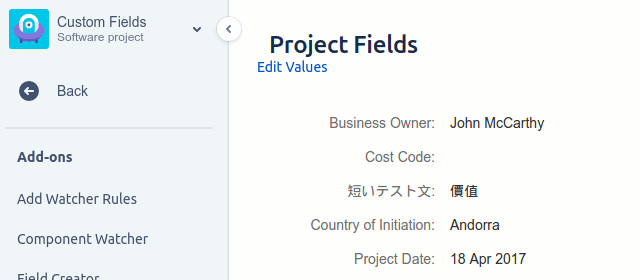
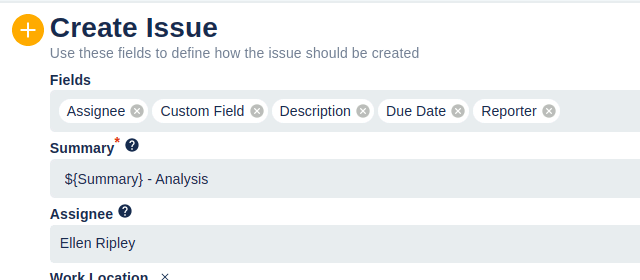
Add the custom fields above to your research project’s Create Issue screen. Configure
Custom Fields options so the Segment and Buying Influence fields use the same
taxonomy across every persona. Link this persona issue to every customer-discovery-interview ticket
that informed it - that traceability is what makes personas defensible when someone asks “where did
this come from?”.
Sub-task breakdown
- Pull source interviews ensures the persona is grounded in real evidence, not opinion.
- Draft persona narrative is the writing pass.
- Review brings in product, design, and sales for sanity-checking.
- Publish produces the one-pager artefact.
- Schedule refresh prevents the persona from ageing silently.
Set up an STM Executor on Issue Created for the Persona issue type to ensure the refresh sub-task
is always created automatically - see /stm/ for the configuration pattern.
Fields to add to your Jira create screen
These are the fields a project admin should make sure exist on the Create Issue screen for this issue type (Project settings → Screens). Without these on the screen, reporters can't provide the information triage needs - and STM can't reference them either.
| Field | Example value | Required |
|---|---|---|
Summary | Persona - Operations Director (mid-market) | Yes |
Persona Name (custom) | Ops Director Olivia | Yes |
Segment (custom) | Mid-market SaaS, 200-500 employees | Yes |
Primary Goals (custom) | Reduce onboarding time, increase team adoption | No |
Top Pains (custom) | Manual rollouts, no central reporting | No |
Jobs-to-be-done (custom) | When I roll out a new tool, I want to... | No |
Channels & Tools (custom) | Slack, Notion, Jira, LinkedIn | No |
Buying Influence (custom) | Recommender / Decision maker | No |
Evidence Links (custom) | Linked discovery-interview tickets | No |
Component/s | personas, research | No |
Labels | persona, 2026-refresh | No |
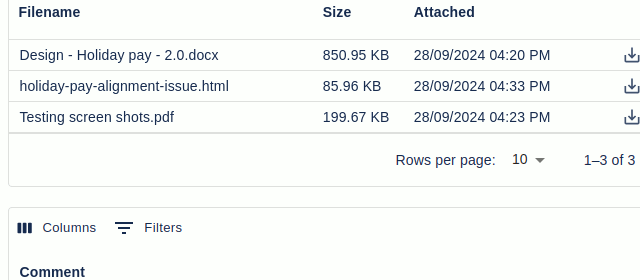
Attachments | Persona one-pager PDF, photo, archetype card | No |
Note on custom fields. STM currently supports up to 5 custom fields per template. You can add as many custom fields as you like to your Jira Create Issue screen - the 5-field limit only applies if you want STM to set or update those custom fields itself.
Sub-tasks STM creates automatically
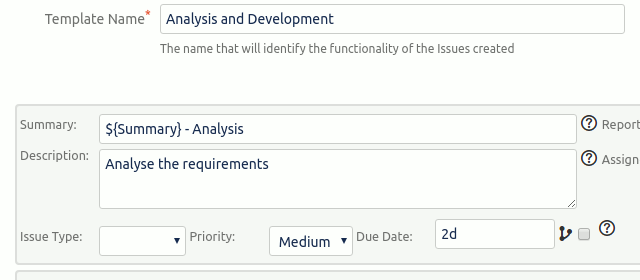
Build an STM sub-task template containing the items below, then wire it to an On Create Issue Executor scoped to this issue type. Whenever a new issue of this type is created in the project, STM creates the full sub-task set in one step - with assignee, due date, and components inherited from the parent unless you override them.
- Pull source interviews and survey responses
- Draft persona narrative and key attributes
- Review with product, design, and sales
- Publish the persona one-pager
- Schedule the next refresh review
Common questions
What is a Jira persona research template?
It is a Jira issue that turns audience persona development into a tracked deliverable. It captures the persona's segment, goals, pains, jobs-to-be-done, channels, and supporting evidence links, plus sub-tasks for drafting, reviewing, publishing, and refreshing the persona. Keeping personas in Jira ensures they are versioned, ownable, and retired when the data goes stale.
How do you build a persona inside Jira?
Create one Jira issue per persona using this template, link every discovery-interview ticket that informed it to the Evidence Links field, draft the narrative in the description, then route the issue through review sub-tasks. Publish the persona one-pager as an attachment and link the issue to any epic or feature-request that targets that persona.
Should personas be one Jira issue or one per attribute?
One Jira issue per persona is the right grain. Sub-tasks handle the drafting and review work. Splitting into one issue per attribute (goals, pains, channels) over-fragments the persona and makes it impossible to view the persona as a whole. Use custom fields for the structured attributes instead.
How do you keep Jira personas from going stale?
Set a refresh interval (typically every two quarters) and create the refresh sub-task as part of the original template. Use STM Issue Templates to auto-create a follow-up review issue six months after the persona is published so refresh work never falls off the backlog. Configure a Custom Fields date for 'next refresh' to filter the backlog easily.
Automate the sub-tasks with STM
STM Issue Templates saves the sub-task list above as a reusable template and creates them on every new issue of this type - via an Executor on issue creation, on status transition, or triggered manually from the issue's "Create bulk sub-tasks" menu. STM does not change the parent issue's create screen (that's a Jira project-settings job) but it removes the manual work of creating the sub-tasks every time.
Try STM on the Atlassian Marketplace ↗ See how STM templates are built →