








Short definition
A comment in Jira is a free-text note added to an issue, attributed to the author and timestamped. Comments support rich text, mentions (@user), inline attachments, and visibility restrictions to specific roles or groups. Comments form the main audit trail of decisions, questions, and updates on an issue - and on most issues, they're the most-edited part of the record.
What’s in a comment
A Jira comment carries:
- Author - the user who posted it.
- Body - rich text (Markdown-ish on Cloud, ADF format; wiki markup on older Data Center). Supports mentions, links, images, code blocks, panels.
- Created / updated timestamps - when posted, and when last edited.
- Visibility - all users, or restricted to a role or group.
The comment list on an issue is sortable by date (newest or oldest first). Most teams default to newest first for speed but oldest first when reading an issue for the first time, to follow the conversation in order.
Comment visibility and the leak problem
Jira’s comment-visibility feature lets a single comment be hidden from users outside a chosen role or group. Common pattern in service projects:
- Reporter (customer) creates a ticket.
- Support agent comments with @internal-only visibility, asking a colleague for input.
- Colleague replies, also @internal-only.
- Agent posts a polished, customer-facing reply with All Users visibility.
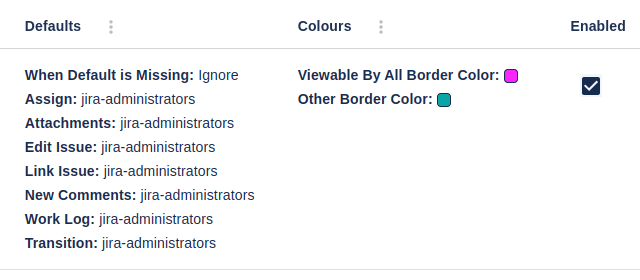
The risk: a single comment posted with the default visibility (All Users) when the team meant to keep it internal. The customer sees diagnostic detail they shouldn’t. Comment Security Default fixes this by flipping the default visibility per-project, so internal teams have to opt out of internal-only rather than opt in.
Editing, deletion, and audit trail
Jira’s default comment model is “last write wins” - editing a comment overwrites the previous version, and deleting a comment removes it from the UI and the search index. There’s no native version history.
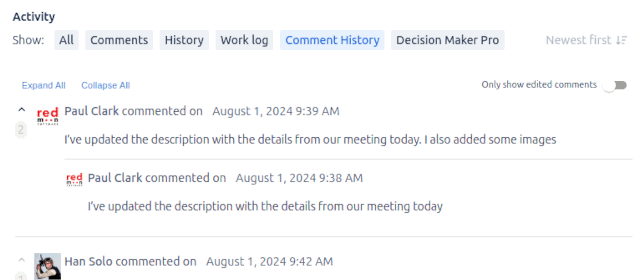
This is fine for casual collaboration but a problem in regulated industries, compliance audits, and any situation where decisions are recorded in comments. Comment History captures every version of every comment as it’s created and edited, with diff view, restore, and search across historic content. It’s the audit trail Jira doesn’t ship by default.
Mentions and notifications
@username in a comment triggers a notification to that user. Mentions are the most common notification
trigger in Jira - far more than watching. They work across projects and respect the issue’s permission
scheme (a mention to someone who can’t see the issue results in no notification, no error).
Comments and automation
Automation rules can be triggered by new comments (e.g. “if a customer comments on a resolved issue, re-open it”) and can also post comments as actions (“when status changes to Done, post a ‘Released in version X’ comment”). Be careful with bot comments - they’re easy to over-use, and a flood of automated comments turns the issue timeline into noise.
See also (Redmoon products)
- Comment History for Jira - See every edit, deletion, and restoration of every Jira comment - including who edited what and the diff between versions. Restore deleted comments and prove an audit trail.
- Comment Security Default - Force a default comment visibility (e.g., internal-only) so a slipped comment doesn't accidentally go to customers.
Common questions
What is a comment in Jira?
A comment in Jira is a free-text note added to an issue, attributed to the author and timestamped. Comments support rich text, mentions, inline attachments, and visibility restrictions to specific roles or groups. Comments form the main audit trail of decisions, questions, and updates on an issue.
Can I edit a Jira comment after posting?
Yes, comments can be edited and deleted by the author (and by users with the Edit All Comments / Delete All Comments permissions). Standard Jira shows only the latest version - if you need to see what was edited, when, and by whom, you need an audit-trail app like Comment History.
Can Jira comments be hidden from some users?
Yes. Each comment has a visibility setting: All Users, or restricted to a specific role or group. Restricted comments are useful in service projects where internal triage notes shouldn't reach customers. Be careful - the default visibility is All Users, and a single slipped comment can leak internal context.
Are deleted Jira comments recoverable?
Not in standard Jira - a deleted comment is gone from the UI and from search. Comment History captures every comment as it's created and keeps the full version history, including deletions, so a deleted comment can be reviewed and restored with the original author, timestamp, and text intact.