








By Nigelle Lim Updated post
Securing Jira: Best Practices & Compliance Insights for Modern Teams
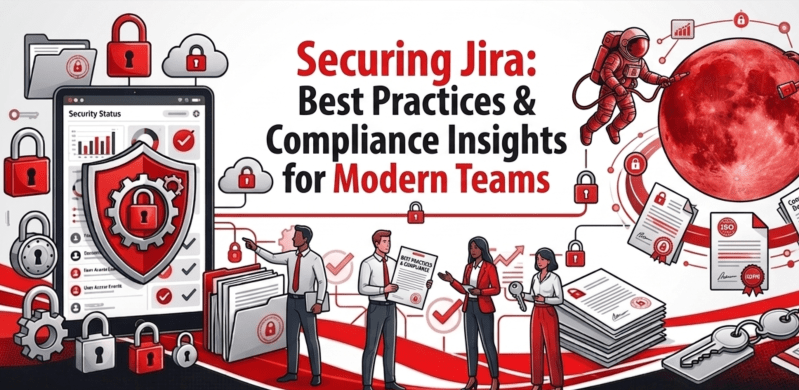
In today’s digital landscape, project management tools do more than just track issues — they house critical business data, workflows, and elements tied to regulatory compliance. As organizations increasingly rely on Jira for managing core projects and collaborative work, ensuring security and compliance is essential.
Understanding Jira Security and Compliance
Jira — whether Cloud or Data Center — is built with multiple layers of protection to keep data confidential, secure, and compliant across industries.
Key Built-In Protections
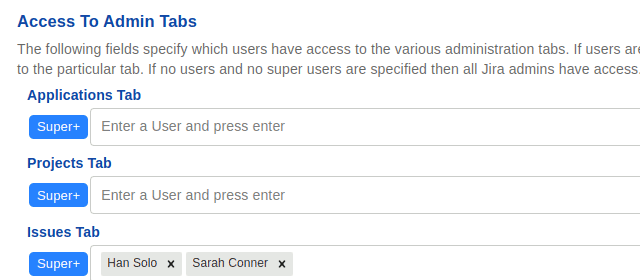
- Granular Permissions: Define precisely who can see and do what in your Jira environment.
- IP Allowlisting and SSO Integrations: Supports IP allowlists and single sign-on via SAML for stronger authentication.
- Data Encryption: All data is encrypted in transit (TLS 1.2+) and at rest (AES-256).
- Compliance Certifications: Aligns with SOC 2, ISO/IEC 27001, and GDPR standards.
Practical Steps for a Secure Jira Instance
- Principle of Least PrivilegeOnly grant access that is necessary and regularly review roles.
- Connect Security ToolsIntegrate Jira with vulnerability scanners or secret detection tools to manage risks automatically.
- Automate Compliance Within WorkflowsAutomate GDPR, SOC 2, or other regulatory checks to reduce human error and audit overhead.
- Monitor and Audit RegularlyEnable audit logging and centralize logs for anomaly detection and compliance evidence.
Security and compliance in Jira are ongoing commitments, not one-time tasks. With Atlassian’s strong platform security and smart governance practices, teams can confidently manage workflows while keeping data safe and compliant.